
Historic site and monument
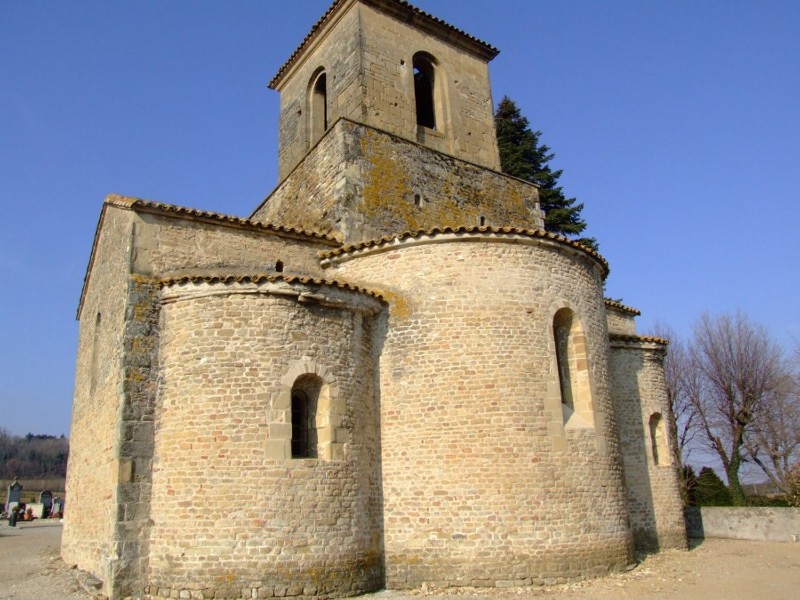
Eglise Saint Pierre
Description
Only the exterior is visible today due to safety work being carried out inside the church
Located on a site occupied since antiquity, Saint-Pierre de Chabrillan church was part of a priory belonging to the Drôme abbey of Saint-Thiers de Saoû.
First mentioned in 1275, it was built in two stages: the choir (apses and transept) dates from the 11th-12th centuries, while the nave dates from the second half of the 12th century. The transept crossing is covered by a cupola on a trumpet and engaged columns topped by richly sculpted capitals. The decorative ensemble takes up themes dear to Pre-Romanesque iconography: frieze of twists, curls, foliage, animals and plants. The sculptures in the apse seem more archaic than those in the transept, where the artist excels in the art of balance and modelling.
The chapel suffered from the Wars of Religion, and major restoration work was carried out in the 1600s. Around 1720, there was talk of demolishing it, but the people of Chabrillan were opposed, and on October 1, 1747, the consuls deliberated and declared: "the community wants the church to survive".
During the French Revolution, the church was requisitioned and used as a workshop to collect saltpetre.
In 1862, Prosper Merimée classified the church as one of the first monuments in the Drôme to be classified as a Historic Monument. In the years that followed, the church was completely renovated. The bell tower was rebuilt in the 19th century.
It underwent two further restorations in 1983 and 1988.
The main attraction of this church is the magnificent sculpted decoration on the nave's capitals, dating from the end of the 11th century.
Chaînes et Labels
-
listed
Accès
- quartier Saint Pierre 26400 Chabrillan
Further information
-
Equipements
Parking nearby
-
Services
Not open to the public
-
Langues de documentation
French
Opening
Closed temporarily.
Contact
Eglise Saint Pierre
quartier Saint Pierre
26400 Chabrillan
26400 Chabrillan
It may interest you

Updated on 23/09/2026
Through Office de Tourisme de la Vallée de la Drôme